
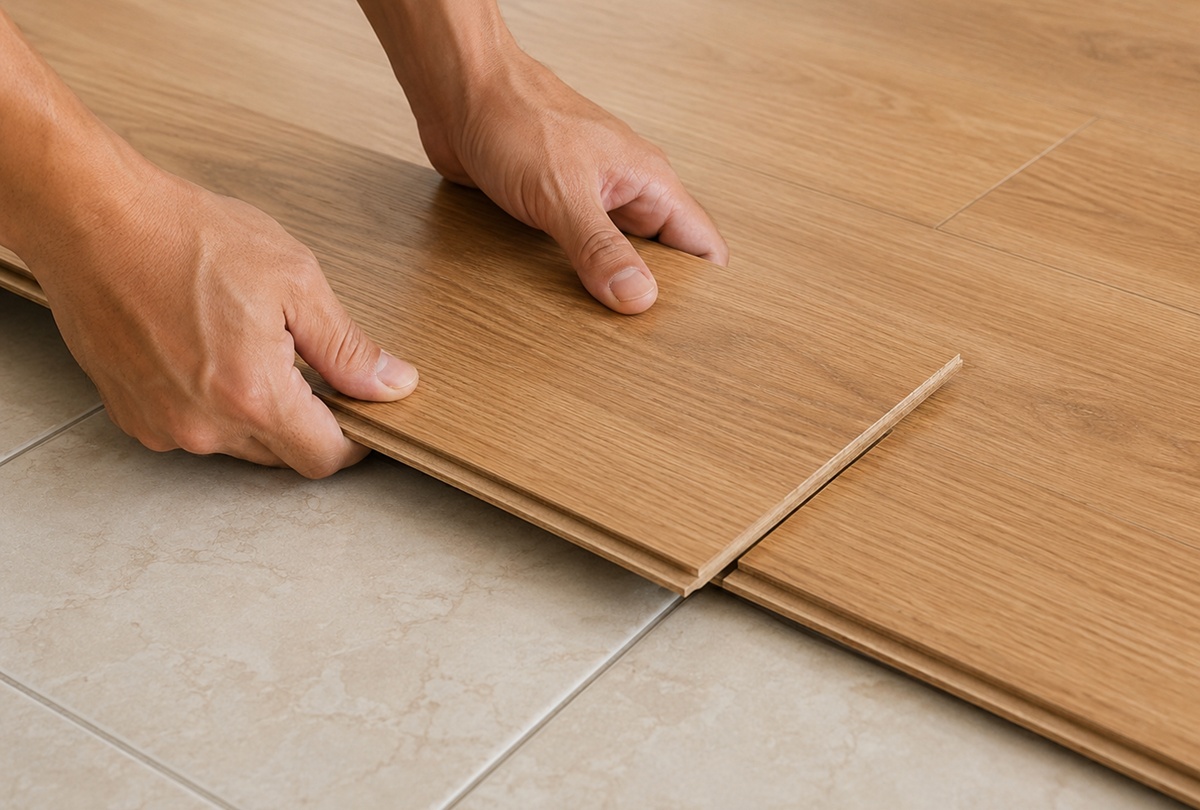
We get asked this all the time by homeowners around Sydney. You’ve got old tiles, you want a fresh timber look, but you really don’t want to deal with ripping everything out first.
And that makes sense. Pulling up tiles is messy, loud and can be expensive. It usually turns into a bigger job than most people expect, with dust getting through the whole house and extra costs for labour and waste removal.
However, in many cases, you can simply install a new timber floor straight over the top of existing tiles. But it’s not always as simple as just laying boards down and hoping it all works. The condition of what’s underneath matters a lot. Read on to find out what these conditions are to help you decide whether or not to pull up your tiles first.
When Installing Over Tiles Works
If the tiles are doing their job properly, they can actually act as a solid base for your new floor.
One of the main things we look at first is how flat the surface is. Timber flooring needs a reasonably even base. If the tiles are uneven, or the grout lines are deep, you can end up with movement in the boards, which leads to noise and wear over time. In situations like that, we usually level things out before installing anything.
The next thing to consider is whether the tiles are properly bonded. If they’ve started to lift or sound hollow when tapped, that’s a sign they’re not holding properly to the slab underneath. A few problem tiles can sometimes be fixed, but if large areas are loose, it’s generally not worth going over the top.
Moisture is another big one. Even though you’re covering the tiles, whatever is happening underneath doesn’t just disappear. If there’s moisture coming up through the slab, it can cause issues with timber flooring later on. That’s why we always check moisture levels before recommending any installation.
What type of Timber Flooring Works Best Over Tiles
When everything underneath is solid, the type of flooring you use becomes important. In most cases, we’re installing a floating floor system over tiles. That means the boards lock together and sit over the surface, rather than being glued down.
Engineered timber works well in these situations, and if you’re comparing options, it’s worth understanding the difference between engineered timber flooring and other types of flooring before making a decision.
Hybrid flooring is another option we often recommend, especially in busy homes. It’s durable, handles moisture better, and the built-in underlay can help deal with small imperfections in the tile surface.


What Changes Inside Your Home
One thing people don’t always think about is the change in floor height. Adding a new layer over tiles will lift the floor slightly, usually around 10 to 15 millimetres. That can affect doors, skirting boards and sometimes cabinetry.
Doors may need to be trimmed so they don’t catch. Skirting boards are often removed and reinstalled to give a cleaner finish, or trims are used if that’s not practical. If you’re planning a full update, it can also be a good time to look at your flooring installation options to make sure everything ties in properly.
In kitchens, the change is usually minor, but it’s still something to be aware of before you start.
Getting It Done Properly
Done properly, going over tiles can save a lot of time and cost, and it avoids turning your home into a demolition site. But the preparation is where most of the work really is. If that part isn’t right, the finished floor won’t perform the way it should.
It’s something we deal with regularly, especially in older properties where tiled areas are being updated. You can see how this comes together on our timber flooring projects and services page if you want a better idea of what’s involved.
Every job is a bit different depending on what’s underneath, so it’s worth getting it checked properly before making a call. If you’re not sure whether your tiles are suitable, we can take a look and give you straightforward advice on the best way to approach it.